Should You Use a Discord Forum Channel or a Dedicated Tool for Feature Requests?
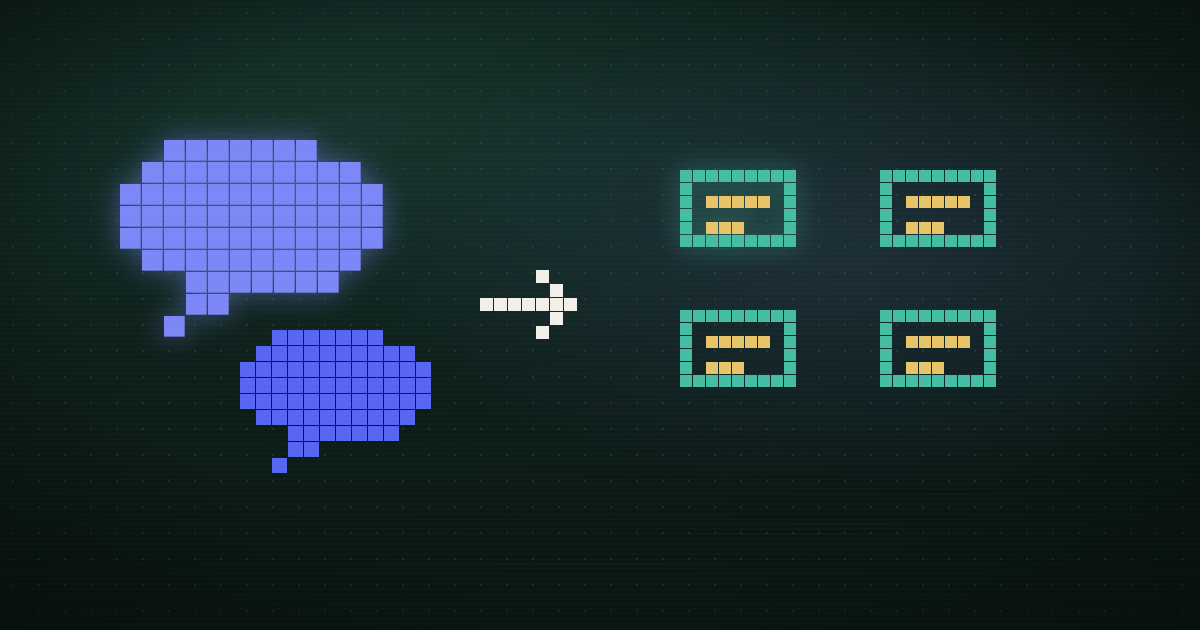
A Discord forum channel is enough for tracking feature requests as long as Discord is the only place they arrive and one person can read every new post before it scrolls out of view. It stops being enough the moment either condition breaks: requests start showing up in GitHub issues or a support inbox too, or the channel gets busy enough that reading everything stops happening.
That's a narrower failure point than "Discord isn't built for this," which is true but not actionable. Forum channels are a real piece of Discord's channel model, with tags, sort order, and a structure that holds one post per idea. The question worth answering isn't whether a forum channel can technically hold a feature request. It's whether your team can still find it, dedupe it, and act on it once thirty more posts land on top.
 “we need SSO before rollout”
 “any update on single sign-on?”
 “SSO came up twice on this call”
 Linear issue, quotes attached
 insight report in Notion
What a forum channel actually gives you
Discord's channel documentation is specific about what a forum channel is: a channel type that "can only contain threads," where each thread is a post. Servers can define up to 20 tags to apply to posts, and set one of two sort orders on the default_sort_order field: LATEST_ACTIVITY, which "sorts forum posts by activity," or CREATION_DATE, which sorts "by creation time (from most recent to oldest)." A server can also set a default_reaction_emoji, a single emoji shown on the add-reaction button for every post in the channel.
That's the whole native feature set for structure: tags, two sort options, and one reaction button. There's no status field, no way to mark a post "planned" versus "shipped" that Discord itself understands, and no vote count beyond however many people happen to click the same reaction. Everything past that, a triage owner, a tagging convention, a spreadsheet that tracks which posts turned into real work, is something a team builds on top, the same way Intercom tags or GitHub labels are conventions a team imposes rather than something the platform enforces for you.
Where a forum channel holds up fine
If Discord is genuinely the only place people ask for things, a forum channel with a light tagging habit does the job. A person reads new posts a few times a week, replies to acknowledge them, tags themes as they recur, and periodically checks which tagged posts have piled up the most reports. Nothing about that requires leaving Discord, and for a community small enough that one person can hold the whole board in their head, it's a completely reasonable stopping point. Our guide to getting product feedback from a Discord community covers that setup in full, including a pinned template and a weekly triage habit that works without anything beyond Discord itself.
The three questions that decide whether it's enough
Does the same request also arrive somewhere that isn't Discord? A CLI tool that takes GitHub issues, a support inbox that takes email, a sales call where a prospect asks for the same thing, all produce requests a forum channel has no visibility into. The forum can only ever be a complete record of what happened inside it.
Does anyone downstream need a status that isn't a tag someone remembered to add? Once a request is actually being built, engineering, support, and the person who originally asked all want to know that. Discord has no field for it. A tag can represent status, but only as long as whoever finishes the work remembers to go back and change it, on every post, every time.
Do you ever need to search across everything that's been posted, not just what's currently on screen? Discord's own message search API caps results at 25 per request, caps the offset at 9,975, and can return a 202 while content is "not yet indexed." That's workable for a quick lookup. It's not the same as a system built to answer "has anyone asked for this before" reliably against months of history.
Answer yes to any of those and a forum channel alone stops covering the job, not because Discord did something wrong, but because those are questions a chat platform was never built to answer.
Two requests, one feature, three weeks apart
Stackframe ships a debugging CLI that backend engineers install locally, plus a small hosted dashboard for teams who want shared trace history. Ilsa Torbin runs developer relations there, which in practice means she's also the person who reads the Discord server's #feature-requests forum channel, a few hundred posts deep since the community launched.
In late October, someone posted in the forum:
Discord, #feature-requests: any way to filter the trace view by service name instead of scrolling through everything? we've got like 12 services reporting and finding ours takes forever
Ilsa reacted with the channel's default emoji and tagged it fr-dashboard, the closest thing the taxonomy had. Sixteen days later, a different engineer opened a GitHub issue on Stackframe's open-source CLI repo:
GitHub issue #412: Feature request: service-name filter on trace output. Right now
stackframe tracesdumps everything interleaved and I'm grepping the output myself, which defeats the point of using the tool.
Nobody connected the two. The GitHub issue got a feature label and sat in the backlog; the Discord post stayed tagged fr-dashboard with one reaction. Both were the same request, asked by two people who never saw each other's version, filed six weeks apart in two systems that don't talk to each other. Ilsa only noticed the overlap in December, doing an end-of-quarter pass through both trackers by hand to write a roadmap update, at which point she couldn't tell whether the actual count was two people or twelve, since anyone who'd mentioned it in a support email or a call would be invisible to both.
"I know the forum works," she said afterward. "I read every post in it. The problem was never noticing what's in Discord. It's noticing when Discord and GitHub are describing the exact same thing."
Where the DIY fix stops working
The obvious fix is a manual bridge: whoever reads the Discord forum also checks GitHub, and copies matching requests into one shared doc or a single tracker issue. That works, and a lot of small teams run exactly this for a while. It has the same ceiling every manual cross-referencing habit does: it depends on one person remembering to check twice, phrasing being similar enough to recognize by eye, and nobody going on vacation the week two more copies of the same request show up. It also doesn't touch the reverse problem, a request that only ever gets asked once in Discord and once by email, where nobody manually checking GitHub would ever catch it.
Past a few dozen requests a month across more than one channel, that's usually the point teams start looking for something that reads all the channels continuously instead of a person doing it in a batch. That's the category Modem works in. Modem's Discord integration reads the channels you connect it to, the forum channel included, the moment posts land, and groups matching requests with whatever came in through GitHub, Slack, or support tools into one counted topic, with every requester attached regardless of which channel they used. The forum channel keeps doing what it's good at, giving your community a visible place to post and react, while the dedupe and status-tracking happen underneath it instead of depending on someone doing a quarterly reconciliation by hand. We build Modem, so weigh that the way you'd weigh any vendor describing its own product. If you want the full comparison of tools built for Discord specifically, including submission-based options that ask users to run a command instead of just reading what they already type, our Discord feedback tools guide covers six of them side by side.
The decision, stated plainly
Keep the forum channel either way. It's a fine place for a community to post and react to ideas, and nothing above argues for shutting it down. What changes is what happens after a post lands: read it by hand while Discord is your only channel and volume stays low, or connect something that reads it alongside everywhere else once requests start showing up in more than one place and nobody can say for certain which ones already matched.
